Class A and Class B Lap Splices in Reinforced Concrete Design
In reinforced concrete design, lap splices are not a drafting formality. They are a force-transfer mechanism. A lap splice allows tensile force to pass from one reinforcing bar, through the surrounding concrete, and into the adjacent bar. Its performance depends on bond behaviour, detailing, and how forces are distributed within the section.
CSA A23.3 addresses this behaviour by classifying tension lap splices as Class A or Class B. These classes do not describe construction quality. They reflect different levels of reliability in tension force transfer based on reinforcement redundancy and splice distribution.
Design Logic Behind Lap Splice Classes
From an engineering perspective, lap splice classification is a way to manage uncertainty. Bond performance can vary due to cracking, placement, consolidation, and tolerances. When reinforcement is well distributed and redundant, the splice becomes less sensitive to local variability.
CSA allows reduced splice demand only when these reliability conditions are clearly satisfied. When they are not, a more conservative splice classification governs.
When a Class A Lap Splice Is Permitted
A Class A lap splice is permitted only under specific conditions that reduce force demand on individual bars. In practical terms, this requires:
At least twice the area of reinforcement required by analysis to be provided at the splice location
No more than 50% of the reinforcing bars to be spliced at the same cross-section
When these conditions are met, tensile force is shared across more steel, allowing a shorter splice length without compromising performance. Class A is therefore a deliberate design choice, not a default assumption.
Why Class B Is the Common Baseline
If the conditions for Class A are not fully satisfied, the splice is classified as Class B.
Class B assumes higher force demand on each bar and greater sensitivity to bond behaviour. As a result, the required lap splice length is more conservative.
This is why Class B is the most common designation on structural drawings—it remains reliable across typical construction conditions without relying on added redundancy.
What Actually Controls Lap Splice Length
Lap splice length is directly related to development length, which reflects the ability of concrete to develop bar forces through bond.
Key influencing factors include:
Bar diameter and steel grade
Concrete strength and confinement
Bar location and casting position
Surface condition (e.g., epoxy-coated reinforcement)
Bar spacing, cover, and overall detailing quality
Lap splice class does not override these fundamentals. It adjusts the required length based on the level of reliability provided by the reinforcement layout.
Detailing Considerations That Matter
Many splice issues arise from detailing rather than calculation. Good practice includes:
Avoid splicing more than 50% of bars at one section unless explicitly designed
Keep splices away from peak tension regions where practical
Account for reinforcement congestion and its impact on concrete placement
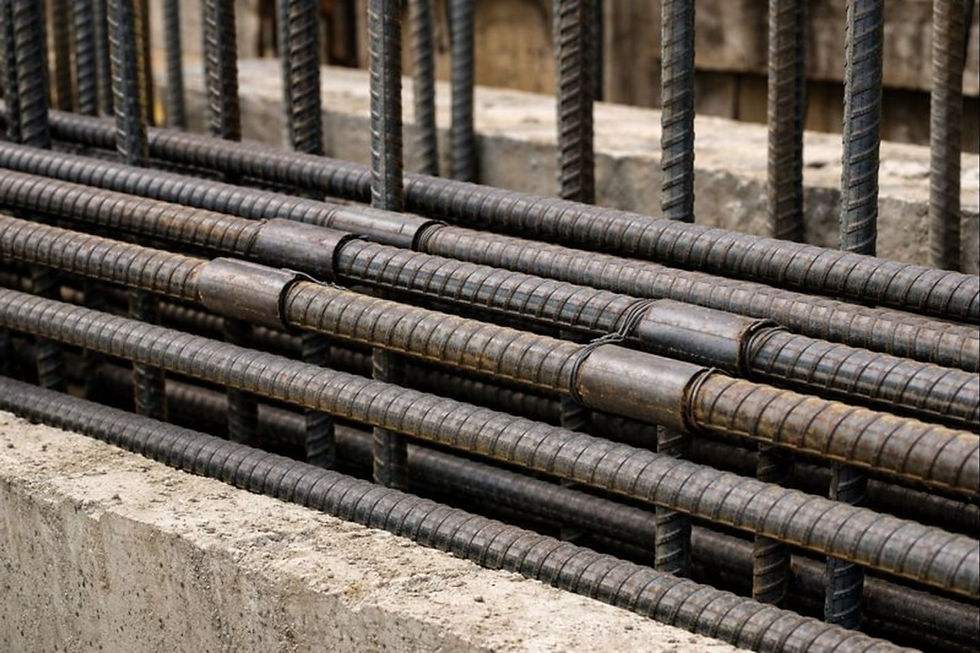
Where lap lengths become impractical, consider mechanical splices with clear engineering notes
Conclusion
Class A and Class B lap splices under CSA A23.3 represent different reliability levels for tension force transfer. Class A applies only where reinforcement redundancy and splice distribution reduce demand on individual bars; otherwise, Class B governs.
At Parsways, lap splice classification is treated as a code-driven engineering decision based on reinforcement layout, constructability, and long-term performance.
FAQs
What is the difference between Class A and Class B lap splices?
Class A splices are permitted only when additional reinforcement and limited splice concentration reduce force demand. Class B splices apply when those conditions are not met.
Why are most lap splices shown as Class B?
Because Class B is robust across typical construction conditions and does not rely on additional redundancy to achieve performance.
What if the required lap splice length is impractical?
In cases of congestion or geometric constraints, mechanical splices may be considered with appropriate engineering justification.


