Letter of Exemption (LOE) for Mezzanine and Racking Installations
Updated: Mar 18
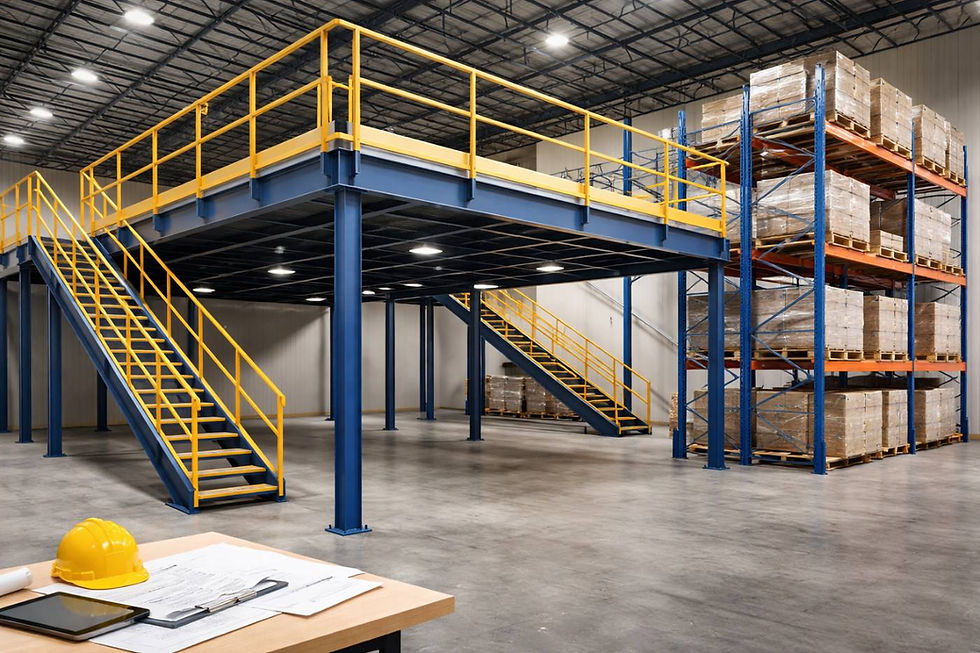
A Letter of Exemption (LOE) is sometimes requested when warehouse racking systems or mezzanine platforms are installed in industrial and commercial buildings across Ontario. The letter is issued by a professional engineer to confirm whether the proposed installation requires a building permit or structural review under the Ontario Building Code (OBC).
In many warehouse projects, storage systems such as pallet racking may appear structural but function as equipment installed within an existing building. A Letter of Exemption helps clarify that the installation does not affect the building’s structural system and may not require a structural permit.
Regulatory Context in Ontario
The Ontario Building Code (OBC) regulates construction activities that affect a building’s structural system, occupancy, and life safety. Structural modifications typically require engineering design and a building permit.
When reviewing warehouse racking or mezzanine installations, engineers assess whether the installation affects regulated building elements, including:
structural load transfer
fire protection requirements
building permit obligations
Structural work in Ontario must follow the design standards referenced by the OBC, including CSA standards for steel, concrete, and wood structures.
If a racking installation remains independent from the building structure and does not introduce regulated structural work, a professional engineer may issue a Letter of Exemption (LOE) confirming that a building permit is not required.
Typical Situations Where an LOE Is Requested
Municipalities, building owners, and contractors frequently request an LOE when installing warehouse storage systems that may appear structural but are typically considered equipment installations.
Common examples include:
adjustable pallet racking systems
bolt-together industrial shelving
freestanding warehouse storage frames
light equipment platforms that are not attached to the building structure
In these situations, the engineer reviews whether the installation:
transfers loads to the building structure
alters the structural frame of the building
creates a new occupied mezzanine level
affects fire separations or required exit routes
If none of these conditions apply, an engineer may issue a Letter of Exemption for warehouse racking or mezzanine installations.
When a Mezzanine Requires Structural Design Instead
Not all elevated platforms qualify for exemption. Many warehouse mezzanines are considered part of the building structure under the Ontario Building Code.
A structural permit is generally required when the mezzanine:
supports occupancy loads from personnel
is connected to the structural framing of the building
requires stairs, guardrails, or fire separations
adds significant structural loading to the building system
When a mezzanine creates additional floor area used for occupancy or operations, it must comply with building classification and life-safety requirements under the Building Code.
In these situations, a Letter of Exemption cannot be issued, and a full structural design package prepared by a professional engineer is required.
Engineering Review for Racking and Mezzanine Installations
Before issuing a Letter of Exemption (LOE), an engineer typically reviews several technical aspects of the installation.
These reviews commonly include:
installation drawings or supplier specifications
anchoring details connecting racking frames to the concrete slab
the capacity and condition of the warehouse floor slab
potential interaction with building columns, walls, or framing
The objective of this engineering review is to confirm that the installation remains independent from the structural system of the building and functions as a storage system rather than a structural component of the building.
Typical Evaluation Factors
Review Item | Engineering Consideration |
Load transfer | Whether storage loads are transferred to the building structure |
Anchoring | Type of anchors used and concrete slab capacity |
Structural attachment | Any connection to building columns, beams, or roof structure |
Occupancy | Whether the installation supports people or only stored materials |
Code classification | Whether the system could be considered a mezzanine under the OBC |
Why Municipalities Request a Letter of Exemption
Municipal building departments often request engineering confirmation when warehouse racking or storage systems are installed inside existing buildings.
A Letter of Exemption helps clarify whether the installation constitutes regulated structural construction under the Ontario Building Code.
Providing this documentation can help:
clarify whether a building permit is required
document that a professional engineering review has been completed
support municipal inspection processes
avoid unnecessary permit applications for non-structural warehouse installations
For many warehouse upgrades, a Letter of Exemption for racking installations helps streamline project approvals.
Conclusion
A Letter of Exemption (LOE) for mezzanine and warehouse racking installations helps determine whether storage systems fall within the regulatory scope of the Ontario Building Code. The engineering review focuses on load transfer, structural attachment, and occupancy use.
When warehouse racking systems remain independent from the building structure, a Letter of Exemption can provide clear documentation for municipalities and building owners while avoiding unnecessary structural permit requirements.
At Parsways Inc., we provide engineering review and Letters of Exemption for warehouse racking and mezzanine installations across Ontario. Our reviews focus on clear engineering documentation, code-based evaluation, and practical coordination with contractors and municipal building departments.


