Tall Wall Assemblies and Tie-Down Systems in Ontario: Structural & Code Compliance Guide
Updated: Dec 25, 2025
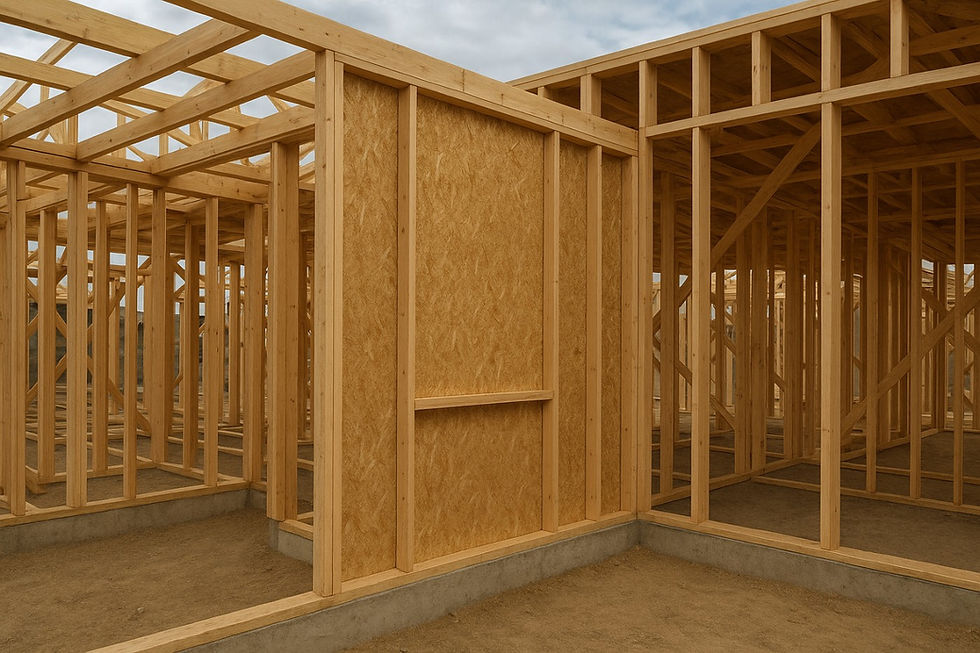
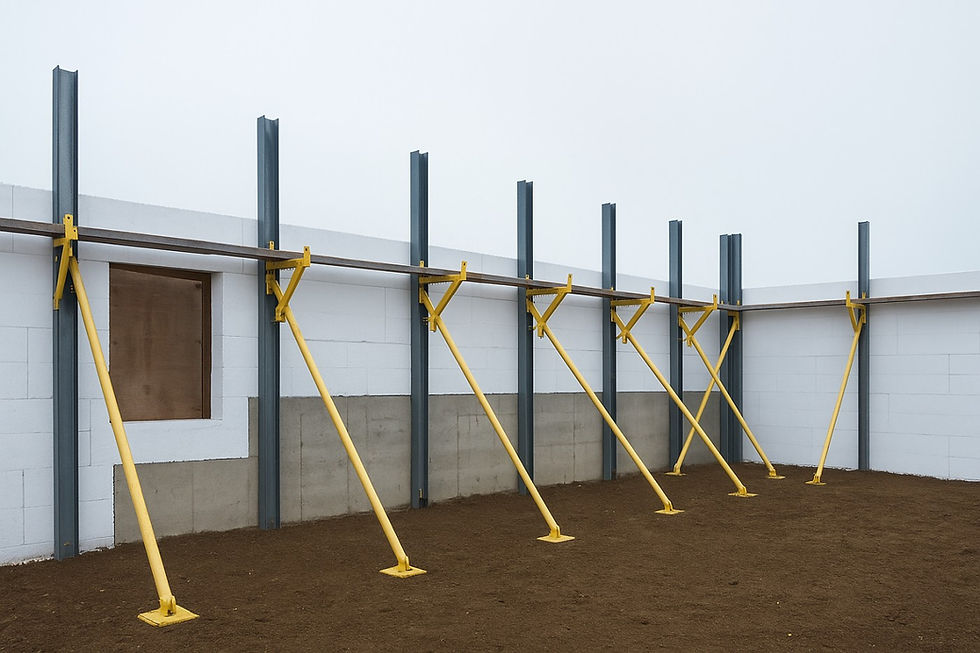
Tall wall assemblies—typically walls exceeding 12 ft (3.6 m) in height—are increasingly common in Ontario residential and commercial construction. Open-concept layouts, high ceilings, and long spans demand walls that can safely resist wind uplift, seismic forces, and overturning moments. Without properly designed tie-down systems, these tall walls pose a significant structural risk.
In Ontario, compliance is governed by the Ontario Building Code (OBC 2024) and applicable CSA standards, including CSA O86 (wood), CSA A23.3 (concrete), and CSA S16 (steel).

OBC 2024 Requirements for Tall Wall Tie-Downs
The OBC does not define a maximum allowable wall height. Instead, tall walls must be justified through engineering analysis in accordance with OBC Part 4.
Key code requirements include:
Design using OBC 2024 wind and seismic load combinations
Tie-downs and hold-downs designed by the structural engineer of record
Continuous load path from roof → wall → foundation
Anchorage meeting CSA A23.3 embedment and edge-distance limits
Corrosion-resistant steel for exterior or moisture-exposed locations
Tie-downs integrated within tested fire-rated wall assemblies
Code compliance is performance-based and must be demonstrated through calculations and detailing.
Common Tie-Down Systems Used in Ontario
Different wall configurations and loads require different tie-down solutions. Ontario engineers typically use strap anchors, mechanical hold-downs, or continuous strap systems, each with unique advantages.
Criteria | Strap Anchors | Continuous Strap Systems | |
Typical Wall Height | Up to ~15 ft (4.5 m) | 12–20 ft (project-dependent) | Multi-storey / long-span |
Load Capacity | Low–Moderate | ~12–20 kN | Moderate–High (distributed) |
Primary Use | Non-critical tall walls | Load-bearing & shear walls | High lateral load walls |
Installation Notes | Flexible, cost-effective, limited uplift resistance | Precise embedment required | Requires framing coordination |
Structural Design Considerations

Effective tall wall design goes beyond connector selection. Engineers must verify:
Spacing: Commonly 4–8 ft (1.2–2.4 m), depending on loads
Foundation anchorage: CSA-compliant embedment depth
Load path continuity: No discontinuities between systems
Environmental exposure: Exterior conditions require HDG or stainless steel
Each project’s wind exposure category and seismic zone directly influence tie-down requirements.
Fire-Rated Wall Compatibility
Tie-downs used within fire-rated walls must not reduce fire resistance. To comply with OBC 2024:
Use HDG or stainless steel connectors
Encapsulate hardware within tested assemblies (e.g., Type X gypsum)
Coordinate structural detailing with fire-rated wall designs
Reference assemblies tested under CAN/ULC-S101
Common Installation Errors
Frequent issues observed during inspections include:
Ignoring wind or seismic forces
Incorrect anchor spacing or embedment
Using non-galvanized steel outdoors
Breaks in the load path between roof, wall, and foundation
Conflicts with fire-rated wall layers
Proper inspection and coordination prevent costly corrections.

Engineering Support for Tall Walls
Licensed structural engineering is essential to:
Select the correct tie-down system
Optimize spacing and detailing
Coordinate structural and fire-resistance requirements
Ensure full OBC and CSA compliance
Conclusion
Tall wall assemblies demand careful structural design and code-compliant tie-down systems. Wind uplift, seismic forces, and fire-resistance requirements must all be addressed through engineered solutions and continuous load paths.
At Parsways Inc., we design tall wall assemblies and tie-down systems that fully comply with OBC 2024 and CSA standards—ensuring safety, constructability, and long-term performance for projects across Ontario.
Co-authored by Yousef Davari and Negin Amani.
FAQs
Are tie-downs mandatory for tall walls in Ontario?
Yes. If analysis shows uplift or overturning forces, tie-downs are required under OBC Part 4.
Can builders choose tie-down spacing without engineering?
No. Spacing must be justified by structural calculations.
Do tie-downs affect fire ratings?
Yes. Improper detailing can reduce fire resistance if not coordinated correctly.